



Peter Obi has issued a powerful lament after a property belonging to his younger brother was demolished in Lagos under dubious circumstances, an episode he describes as emblematic of “coordinated lawlessness.” According to Obi’s post on X, armed men acting on a vague court judgment demolished a long-standing building in Ikeja that had stood for more than 15 years. Those behind the demolition failed to provide a valid court order or even name the property owner, forcing Obi to rush from Abuja to confront security personnel and excavators himself.
Obi’s emotional recount paints a troubling picture: he waited from 10 a.m. to 2 p.m., seeking answers and proof of legal authority, but found none. He described a contractor who “didn’t even know who sent him” and security agents unable to produce any demolition permit for the property, which was officially owned by his brother’s registered company. Obi asked pointedly how a court could issue a judgment against an unknown person and execute demolition without serving any party.
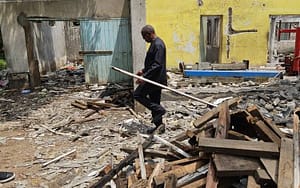
That incident is more than just a personal loss. Obi warned that such breaches of the rule of law create an environment hostile to business and investment. He recalled a recent conversation with a foreign investor who said they hesitate to invest in Nigeria due to pervasive insecurity “Nigeria is a lawless country” was his blunt assessment. Obi’s concerns tap into growing unease over arbitrary demolitions and human rights abuses across the country, especially against individuals who dare to challenge the system.
Within the broader context of targeted political attacks following his run for the presidency under the Labour Party, Obi interprets this demolition as part of a campaign aimed at silencing dissent and intimidating opponents. He recounted his personal struggles with what he called “abuse of my human rights,” stating that if such impunity can target someone with legitimate property rights and political prominence, the average Nigerian is even more vulnerable.
Importantly, Obi emphasized that this was not merely a private grievance. He framed it as a national crisis, expressing fear that unchecked abuses like this threaten Nigeria’s stability and future growth. He urged urgent reforms to protect life, property, and civil liberties, highlighting how arbitrary power can destroy both public trust and private businesses. He concluded by reaffirming his vision of “a better Nigeria where lawlessness will be a thing of the past”.
At the time of the report, Lagos government authorities had made no official statements, and there was no public record of a valid Court-ordered demolition tied to the property. That silence has reinforced Obi’s claims of impunity and emboldened public discourse on unchecked governmental aggression.
This incident has reignited debates over the rule of law in Nigeria. It raises critical questions: Who authorizes demolitions? How can citizens verify the legitimacy of court orders? Where is the accountability when personal and commercial properties are destroyed without due process? As Obi continues to press for answers, his message resonates more widely with Nigerians who feel unprotected and disenfranchised.
In closing, Obi’s lament is a wake-up call to recover Nigeria’s lost respect for law and justice. It underscores a fundamental truth: when one man’s rights can be trampled so publicly and invisibly, a nation risks losing its moral and economic foundation. The demolition of a family-owned property thus becomes a symbol, reminding us that the fight for the rule of law is far from over and that hope, and accountability, must not be demolished along the way.
